
OnlyFans Discovery: Building a Shortlist Before You Follow
OnlyFans does not have a discovery feed, a search directory, or a suggestion engine. That single fact shapes everything about how fans find pages worth following. Because the platform offers no built-in way to browse creators, the work of finding someone falls entirely on the user.
Free pages sit at a price of $0 and earn through pay-per-view messages and tips rather than subscriptions. Paid pages run from a minimum of $4.99 to a maximum of $49.99, with typical pages between $4.99 and $15 and averages around $5 to $10. There is no base price below $4.99; only promotional first months may dip under that figure. A shortlist helps you compare pages across both models without committing money or attention too early.
Why shortlisting beats following first
A cluttered following list is not just untidy. It changes what you see, what you remember, and how you judge new candidates. When you follow twenty pages in a week, each one competes for the same small amount of attention. Posts blur together, and you lose track of who posts what.
Following first also costs money in a quiet way. Auto-renew keeps charging for pages you stopped caring about months ago. When a creator raises the subscription price, auto-renew stops, and existing access lasts until the current paid period ends. That rule protects you at the moment of a price change, but it does nothing about the pages you forgot to cancel at the old price.
A shortlist fixes both problems. It separates the act of finding from the act of following, so each decision gets made on its own. You record what you see, wait, and compare. Only then do you follow.
- Following every page you click on, before checking whether it posts regularly.
- Paying for several pages in the same week, then losing track of renewal dates.
- Judging a page by one good week instead of a steady posting rhythm.
- Ignoring the difference between free pages and paid pages when comparing.
- Skipping the profile entirely and relying on a single post or message.
Where candidates come from
Discovery routes matter because the platform itself provides none. There is no feed that surfaces new creators to you, which is exactly why ranking sites exist. Those sites collect and sort pages so users can browse without guessing. Treat them as a starting point, not a final answer.
Good candidates usually come from several places at once. A ranking list gives you names. A creator’s own links give you a sense of how they present themselves elsewhere. Community discussions give you context that a profile alone cannot.
- Curated ranking pages that group free and paid accounts by category.
- Recommendations from people whose taste you already understand.
- Cross-links from a creator’s other public profiles or websites.
- Community threads where users discuss pages they follow and why.
- Return visits to pages you noticed earlier but did not follow yet.
One warning applies to every route. A page that appears on many lists is not automatically better than one that appears on few. Lists have their own biases, and popularity is not the same as fit. Record where you found each candidate so you can weigh the source later.
Treat every ranking list as a lead, not a verdict. Note the date you saw a page listed and check whether the account still posts at the same pace. A stale list can send you toward pages that stopped updating months ago.

Screening signals to note
Screening is where a shortlist becomes useful. Instead of scrolling and reacting, you write down a small set of observations for each candidate. Keep the notes short. The point is comparison, not a full review.
Posting rhythm is the first signal. A page that posts daily and one that posts monthly are different products, even if the price is identical. Link hygiene matters too. A profile that links to a working page, a clear bio, and a consistent name is easier to trust than one with broken or mismatched links.
| Signal | What to record |
| Posting rhythm | How often new posts appear in a normal week. |
| Price and model | Free at $0 or paid within the $4.99-$49.99 range. |
| Bio clarity | Whether the description matches what the page actually posts. |
| Link hygiene | Whether external links work and point where they claim. |
| Message style | How often pay-per-view messages arrive and what they cost. |
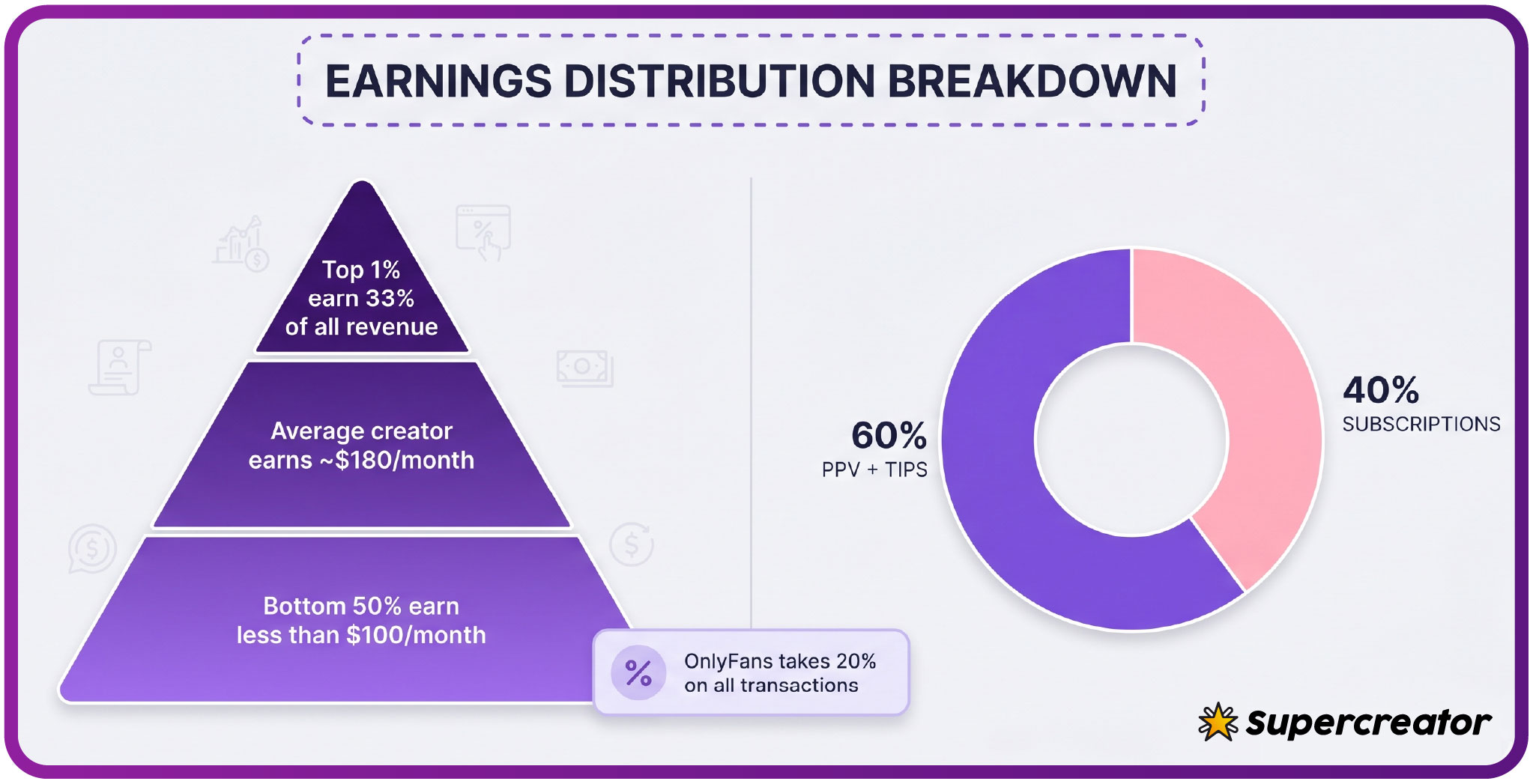
Price deserves its own note because the models differ so much. On a free page, the creator earns through pay-per-view messages and tips. On a paid page, the subscription carries most of the weight. The platform fee is 20% on everything, subscriptions, tips, and pay-per-view, and the creator keeps 80%.
The two-week observation window
Two weeks is long enough to see a pattern and short enough to stay practical. During that window you do not follow. You check the page, note what changed, and update your records. Most pages reveal their real rhythm within that period.
What changes during observation is usually small but telling. A page that posted five times in week one and once in week two is not the same as one that posted steadily both weeks. Message frequency also becomes visible. A free page that sends several pay-per-view messages a day creates a different experience than one that sends a single offer each week. For a starting point, onlyfans free top collects free pages.
Turn on two-step authentication on your own account before this stage. It takes a minute and protects the account you are about to spend money from. Safety habits belong in the shortlist process, not after it.
At the end of two weeks, you should have three things for each candidate: a posting pattern, a price note, and a short impression of tone. If any of those is still unclear, extend the window rather than guessing.
Comparing candidates side by side
Comparison is easier when the criteria are fixed. Use the same four or five measures for every candidate, or the ranking turns into a mood rather than a decision. A simple table keeps the process honest.
Score each criterion from one to three. A page with a steady rhythm, a clear bio, and a price inside the typical $4.99 to $15 band will usually outrank a page that only scores well on one measure. The totals matter less than the pattern they reveal.
| Criterion | Low | Medium | High |
| Posting consistency | Irregular gaps | Mostly steady | Predictable weekly rhythm |
| Price fit | Above your budget | Within typical range | Free or low paid tier |
| Bio accuracy | Vague or mismatched | Partly clear | Matches the page |
| Message load | Constant pay-per-view | Occasional offers | Rare or none |
Keep the shortlist to five candidates at most. A longer list invites the same clutter you are trying to avoid, just in a different place. If a sixth candidate appears, drop the weakest one rather than expanding the list.
When to follow and when to drop
Following should be a decision, not a reflex. The triggers below are signals that a candidate has earned a place in your following list. They are not rules, but they keep the choice tied to observation rather than impulse.
- The page posted consistently for the full observation window.
- The bio and the actual posts match each other.
- The price sits inside the typical $4.99 to $15 band or the page is free.
- Pay-per-view messages arrive at a rate you find reasonable.
- You can describe what the page offers in one sentence.
Dropping matters just as much. A shortlist only works if weak candidates leave it. Remove a candidate when the posting rhythm collapses, when the price rises beyond what you planned to pay, or when the messages become more frequent than the posts.
- No new posts for several weeks with no explanation.
- A price increase that pushes the page past your budget.
- Pay-per-view messages that outnumber ordinary posts.
- A bio change that no longer matches the page.
- Broken links or a renamed account you cannot verify.
If you want a broader pool to compare against before deciding, a curated index such as onlyfans free top can shorten the search stage. Use it to gather candidates, then run the same two-week check on each one. No list replaces your own observation. BestOnlyFans style directories exist for the same reason: the platform offers no directory of its own.
Keeping the shortlist small
The final habit is maintenance. A shortlist drifts toward a following list if you never remove anything from it. Set a fixed size, review it on a schedule, and treat every addition as a trade rather than a gain.
Reviewing once a month is enough for most people. During the review, check renewal dates, confirm prices, and remove anything that no longer fits. Remember that when a creator raises the subscription price, auto-renew stops and access lasts until the current paid period ends, so a price change is a natural moment to re-evaluate.
- Cap the list at five candidates and never exceed it.
- Review the list monthly and remove the weakest entry.
- Record renewal dates so nothing charges by accident.
- Re-check prices before each renewal, not after.
- Move a candidate to following only after the full observation window.
The platform’s lack of a discovery feed is the reason all of this work exists. BestOnlyFans and similar ranking sites fill part of that gap, but the shortlist is yours to build. Do it before you follow, and the following list stays small, deliberate, and easy to manage.
BestOnlyFans is mentioned here as one example of a rankings site, not as a requirement. The method works with any source of candidates. What matters is the order of operations: gather, screen, observe, compare, then follow.
FAQ
Why does OnlyFans not show me new pages to follow?
The platform has no built-in discovery feed or directory, so users rely on external lists and recommendations to find creators.
Is there a subscription price below $4.99?
No. The minimum base price is $4.99, and only promotional first months may dip below that amount.
How long should I watch a page before following?
Two weeks is usually enough to see a posting rhythm and a message pattern clearly.
What happens if a creator raises the price?
Auto-renew stops, and your existing access continues until the current paid period ends.