
Evaluating Pay-Per-View Costs on Free OnlyFans Pages
OnlyFans free pages remove the subscription barrier but replace it with pay-per-view messages that carry their own costs. If you want to understand what a $0 subscription really means for monthly spending, the answer is that revenue shifts from a fixed base fee to individual unlocks, tips, and paid chat. This guide explains how that model works, what typical PPV prices look like, and how to keep variable spending under control. BestOnlyFans tracks these patterns across ranking data so subscribers can compare pages on total cost rather than headline price.
How Free Pages Generate Revenue Without Base Fees
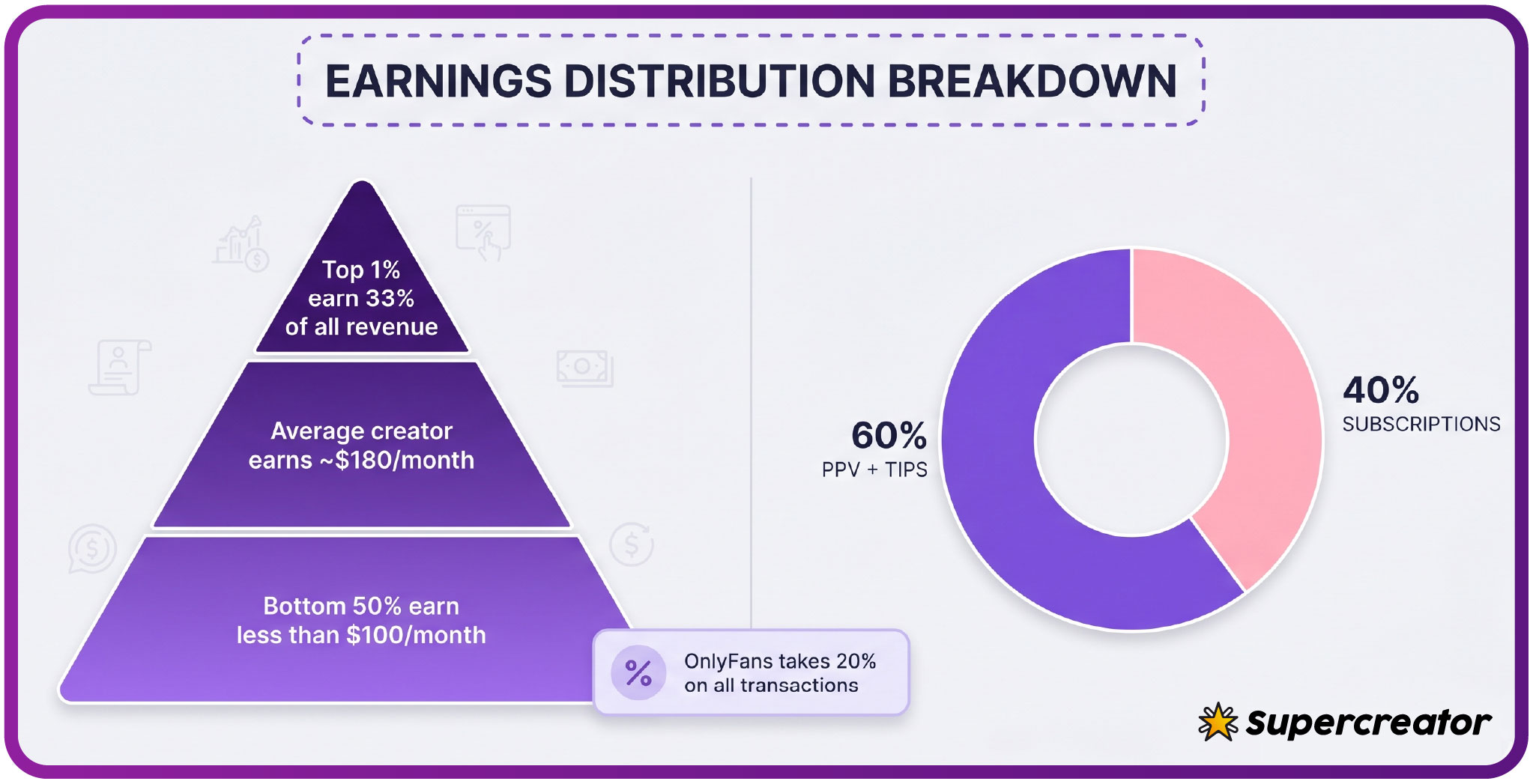
OnlyFans applies a 20% platform fee to every transaction, and the creator keeps 80%. On a free page, that fee lands on each PPV unlock, each tip, and each paid chat message instead of a recurring subscription charge. The platform economics stay the same, but the subscriber experience changes completely because there is no single predictable charge at the start of the month. BestOnlyFans refreshes its rankings every month.
Paid chat commonly runs $3 to $5 per message, and tips can reach $100, so an engaged audience can generate steady revenue without any base fee at all. PPV messages unlock up to $50, which sets the ceiling on any single purchase and keeps most transactions in a lower band.
This model also gives the subscriber direct control over total spending in a way paid subscriptions do not allow. The trade-off is that most substantial content sits behind individual price points rather than being included in a monthly fee.
Tip: study a free page’s posting rhythm before you unlock anything. A creator who posts frequently in public messages but reserves nearly everything valuable behind PPV is signaling where the real cost of the page sits.
Typical PPV Pricing Patterns Across Content Categories
Pricing varies by content category and by how a creator structures their offers, since some sell single items, others sell bundles, and some run sequential series where each message builds on the last.
The list below covers the five structures you are most likely to encounter.
- Single photo unlocks at a lower per-item cost, often $3 to $5 for a set of images.
- Short video clips in the mid-range, typically priced between $5 and $15 depending on length.
- Extended videos that approach the $50 maximum unlock, usually 15 minutes or longer.
- Themed bundles framed as bulk discounts, where several items are packaged at one price.
- Sequential message series that require multiple unlocks to see the full set.
Bundle framing deserves scrutiny. A bundle priced at $25 sounds like a discount next to five separate $8 unlocks, but only if you actually wanted all five items. Sequential series carry the same risk: the first unlock is cheap, and the value only appears if you keep buying.
Accumulation Mechanics: When Small Unlocks Become Large Bills
A $4 unlock feels trivial in isolation. The gap between perceived and actual cost is the central budgeting problem with free pages, and it grows quietly because each individual decision is small enough to dismiss.
Several patterns accelerate that accumulation.
- Daily message notifications trigger impulse unlocks that feel insignificant one at a time.
- Sequential content requires multiple purchases before the set is complete.
- Time-limited teaser windows create urgency that discourages price comparison.
- Social proof messaging encourages competitive tipping beyond the content price.
The compounding effect is not a flaw in the model, but it is a genuine difference from paid subscriptions. When you unlock twelve $4 messages, the total only becomes clear when you add it up, and most subscribers never do.
Averaged across a month, twelve unlocks plus a handful of tips routinely passes the cost of two mid-range paid subscriptions. The spending never announces itself as a single decision, which is exactly why a written total matters more here than on any fixed-price page.
Reading PPV Offers Before Committing to Unlock
Preview quality is the first signal. A clear thumbnail or a few seconds of video tells you more about the content than any caption, and creators who provide solid previews generally price more honestly because they can afford to show what you are buying.
Calculating a rough cost per minute or cost per image makes two offers from different creators directly comparable, which is difficult to do by feel alone.
| Content Type | Common Price Range | Value Assessment Factor |
|---|---|---|
| Photo sets | $3-$5 | Cost per image and whether the set is new or recycled |
| Short videos under 2 minutes | $5-$10 | Cost per minute relative to the creator’s typical output |
| Standard videos 5-10 minutes | $10-$20 | Production quality and whether previews match delivered content |
| Extended videos 15+ minutes | $25-$50 | Total runtime, resolution, and full-video versus clip status |
| Livestream replays | $10-$25 | Whether the original broadcast was free to attend live |
Five checkpoints make the decision faster in practice.
- Preview quality, including whether the thumbnail clearly represents the item.
- Stated duration or content count, so you can calculate a unit price.
- Price relative to past unlocks from the same creator, which reveals drift over time.
- Message context indicating exclusivity versus recycled content already sent before.
- Time since the last major content release, since a long gap often precedes a higher price.
Budgeting Tools for Variable PPV Spending
The goal is not to eliminate PPV purchases but to make the total visible before it becomes uncomfortable.
- Keep a manual weekly PPV log and carry a running monthly total forward.
- Set a notification schedule that limits how often you check messages at all.
- Load a prepaid wallet with a hard monthly cap, so spending stops when the balance runs out.
- Review periodically and compare variable costs against an equivalent fixed subscription.
The prepaid wallet method is the most effective because it introduces a physical limit rather than a mental one. Combined with a weekly log, you get both a hard ceiling and a clear record of where the money went.
Payment security belongs in the same conversation. OnlyFans uses card verification with a $0.10 hold that is refunded within days, and that is normal. Unusual payment requests, off-platform links, or messages asking for card details outside the platform’s own checkout are not. Treat any such request as an attempt at phishing, keep your payment activity inside the official interface, and review account security settings before acting on money-related messages.

Comparing Free-Page PPV to Paid Subscription Value
The break-even question is simple: at what monthly PPV total would a paid subscription have delivered more content for less money? Paid base subscriptions run from $4.99 to $49.99, with most pages priced between $4.99 and $15 and averages clustering around $5 to $10. Promotional first months can sit below $4.99, such as a $3 first month, while base prices may not.
| Spending Pattern | Monthly Cost Estimate | Equivalent Subscription Tier |
|---|---|---|
| Light use: 2-3 unlocks monthly | $8-$15 | Mid-range paid page at $9.99-$14.99 |
| Moderate use: 8-12 unlocks monthly | $30-$50 | Upper-tier paid page at $24.99-$49.99 |
| Heavy use: 20+ unlocks monthly | $70-$120 | Exceeds most paid pages; two subscriptions would cost less |
The comparison is not purely financial. Free pages offer choice, since you pay only for what interests you, and that flexibility has real value for subscribers with narrow tastes. Paid pages offer predictability and often include more content per dollar for subscribers who want most of what a creator posts.
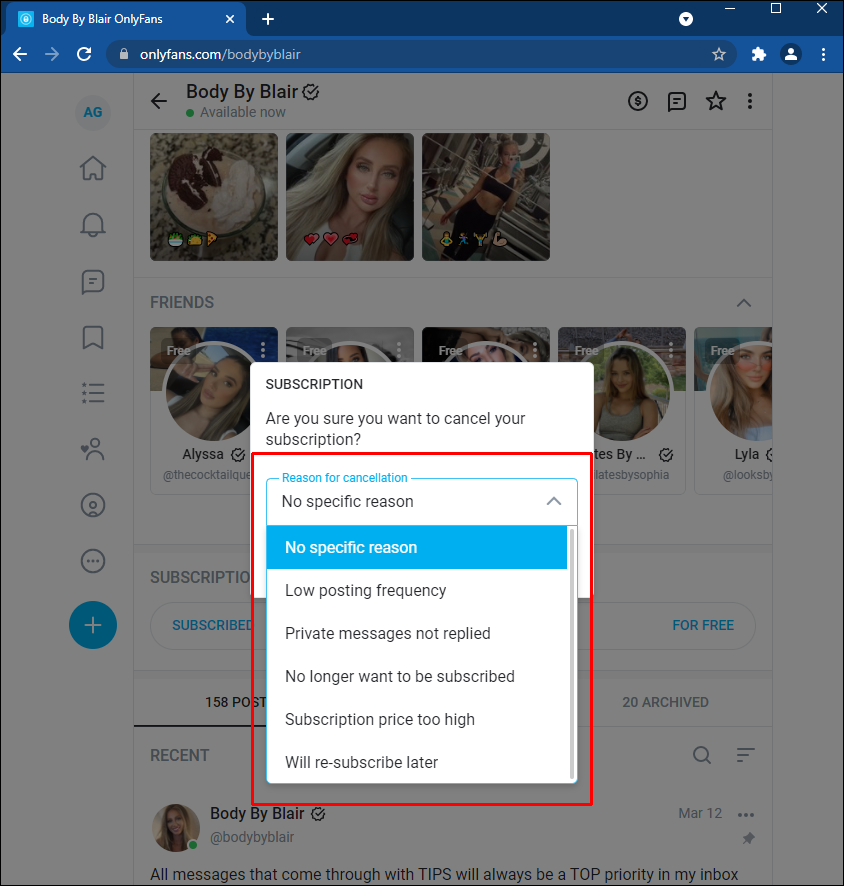
One practical detail affects the calculation. When a creator raises the price on a paid page, auto-renew stops, and existing access lasts until the paid period ends. PPV has no equivalent protection, because each unlock is a fresh decision at whatever price the creator sets. That difference is why ranking projects such as BestOnlyFans compare pages on total monthly cost rather than on advertised subscription price alone.
If you spend across six or seven free pages, it is worth reviewing which ones deliver consistent value against your actual spending. The same methodology used to rank platforms for a best onlyfans site comparison applies just as well to your own subscription list, where a simple audit often frees up more money than expected.
Protecting Against Predatory PPV Pricing Tactics
Most creators price fairly, but the free-page model does allow structures that shift cost onto the subscriber without adding content. The warning signs are usually visible before you spend much, and recognizing them early is cheaper than learning from a large bill.
- Content deliberately split across multiple paid messages when it could have been one unlock.
- Minimal free content that establishes no value baseline for judging the paid material.
- Excessive direct message frequency unrelated to any actual content release.
- Unlock promises that repeatedly require additional purchases to fulfill.
- Tip requests that precede promised content delivery rather than following it.
If a page generates more purchase requests than delivered material, the pricing structure is working against you regardless of how reasonable each individual price looks.
Keep records of what you have unlocked. If you request the same content twice because it was recycled under a new caption, that is a legitimate reason to stop following the page. Also check the security settings on any page you spend money on, and treat off-platform payment requests as a hard no, since those fall outside the platform’s buyer protections entirely.
FAQ
Why do creators offer free pages if they earn more from paid subscriptions?
Free pages lower the barrier to entry and build a larger follower base, which the creator then monetizes through PPV messages, tips, and paid chat. A subscriber who never unlocks costs nothing, but the broader audience creates more opportunities for paid engagement than a smaller paying subscriber list would.
Can I negotiate PPV prices directly with OnlyFans creators?
Some creators respond to polite messages about bundle pricing or repeat-purchase discounts, but there is no platform feature for negotiation and no obligation on their side to adjust.
What happens to unlocked PPV content if I stop following a free page?
If specific content matters to you, treat the unlock as a one-time purchase rather than a permanent library.
How can I tell if a PPV message contains new content or recycled material?
Recycled material often arrives with a new caption and a fresh price, but the thumbnail, framing, or duration will match something sent weeks earlier. Keeping a simple log of what you have purchased makes these matches obvious and prevents paying twice for the same item.