
Reading Price Stability Signals in BestOnlyFans Rankings
OnlyFans pricing runs on a fixed range: paid subscriptions start at $4.99 and top out at $49.99 per month, with most pages clustering between $5 and $10. Ranking cards exist because the platform has no built-in discovery feed or directory. That gap pushed third-party sites to compile creator lists, and the more careful ones publish price history next to each listing. Reading those signals correctly is the difference between a predictable monthly charge and a billing surprise.
This guide explains how to interpret the price data shown on ranking cards. It covers promotional pricing versus base rates, stability patterns, auto-renewal mechanics, and the limits of third-party data. The goal is practical: fewer surprises, better budget control, and a clearer picture of what a subscription will actually cost over time.
What BestOnlyFans Ranking Cards Actually Display
A ranking card is a summary panel. It presents a creator’s current listed price, an observed price history range, a timestamp for the last recorded update, promotional indicator flags, and relative price positioning within a content category. None of this comes from an official OnlyFans API. It is collected by observing public creator pages over time and logging changes.
That collection method shapes what the numbers mean. A price history range reflects what observers saw, not what every subscriber paid. Private offers, bundle deals, and direct messages with custom rates stay invisible to outside tracking. Treat each card as a reasonable estimate rather than an audited financial record.
The five core data elements break down like this:
- Current listed price: the base monthly rate visible on the creator’s page at last check
- Observed price history range: the highest and lowest base rates recorded over the tracking window
- Timestamp of last update: when the card’s data was last refreshed
- Promotional indicator flags: markers showing a temporary discount was active during tracking
- Relative price positioning: where the creator sits compared to others in the same content category
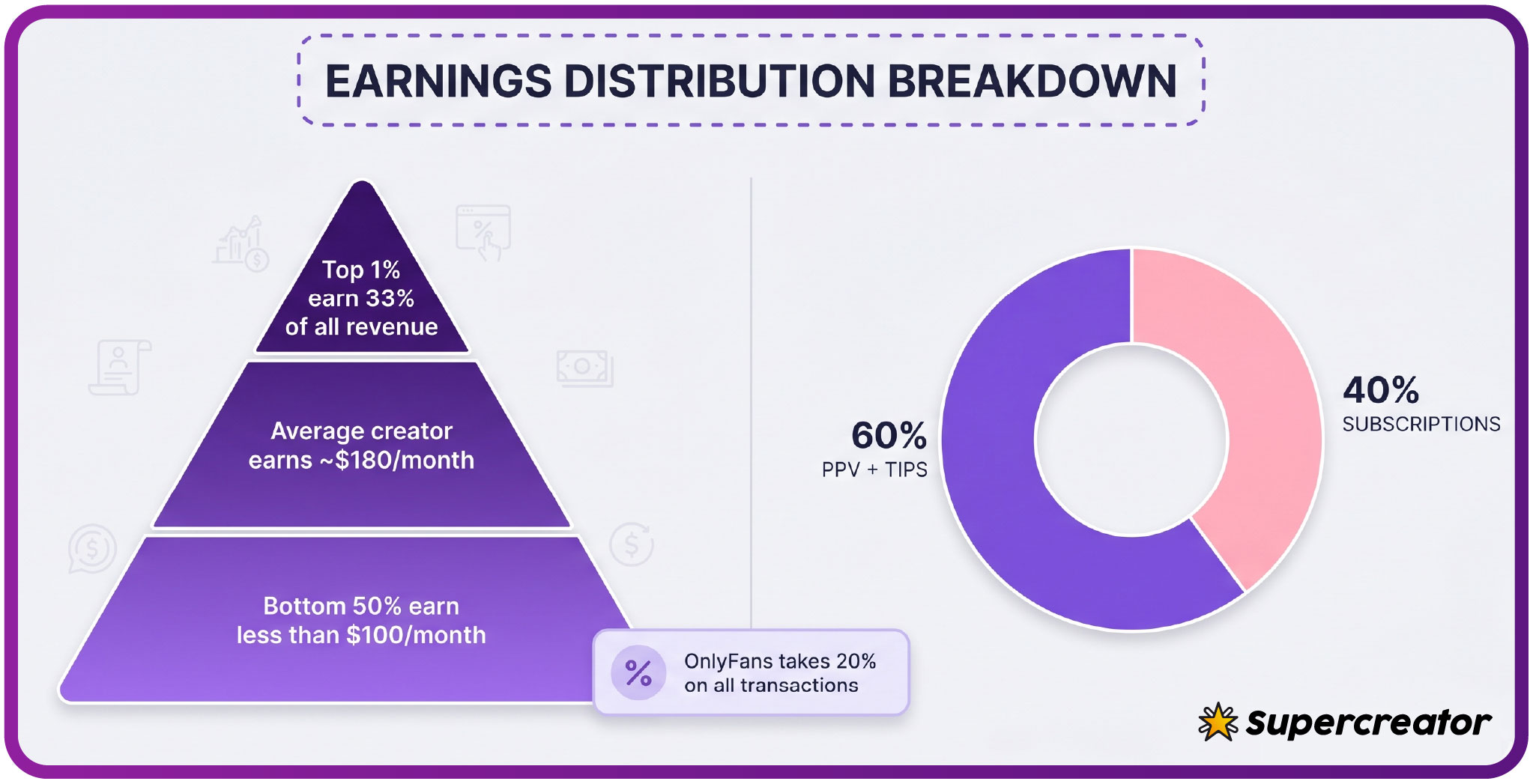
The platform fee is 20% on everything, and creators keep 80%. That split applies to subscriptions, tips, and pay-per-view unlocks alike. It does not change your cost, but it explains why some creators push tips and PPV messages rather than raising base prices.
Distinguishing Promotional Pricing from Base Rates
Promotional first months can legally sit below $4.99. A $3 first month is a valid promotional price. The base rate behind it cannot drop below $4.99 under any circumstances. Confusing the two is the most common budgeting error subscribers make.
A card showing “$3” without context may be flagging a first-month offer. A card showing “$3 base” is either stale data or an error. Verification matters before you commit money to a recurring charge.
Run these four checks before treating any listed price as the true rate:
- Check for prices below the $4.99 minimum, which signals promotional rather than base pricing
- Look for promotional end-date markers on the card or the creator’s page
- Compare the current figure against the historical price cluster shown in the card’s range data
- Confirm the current rate directly on the creator’s page before subscribing
Free pages set their price to $0 and earn through pay-per-view messages and tips instead. A $0 listing is not a discount. It is a different business model, and the cost to you shifts to individual unlocks. PPV messages can run up to $50, while paid chat commonly costs $3 to $5 per message.
Tip: when a card shows a price under $4.99, assume it is a first-month promotion until you verify otherwise. Budget for the returning base rate, not the introductory one.
Identifying True Price Stability Versus Volatility
Stability is visible in the shape of the history line. A flat line over six months means one base rate held steady across the whole tracking window. A single dip that returns to the original figure suggests one promotional cycle, not a pricing problem.
Volatility looks different. Repeated mid-cycle adjustments, base rates climbing and dropping within the same quarter, or gaps where the price disappears entirely all point to a creator who changes terms often. Frequent changes are not inherently suspicious, but they make budgeting harder.
Five indicators separate stable pricing from noise:
- A flat price line across six months with no recorded changes
- A single promotional dip that returns cleanly to the original base rate
- Consistent positioning inside the typical $4.99 to $15 range
- Absence of mid-cycle adjustment markers in the history log
- Creator tenure that correlates with the pricing record, since longer histories are easier to read
Cards with longer tracking windows produce more trustworthy stability signals. A creator tracked for two years with one price change is easier to assess than one tracked for three weeks. Methodology matters here, and BestOnlyFans weights history length when scoring consistency.
How Price Changes Trigger Auto-Renewal Cancellations
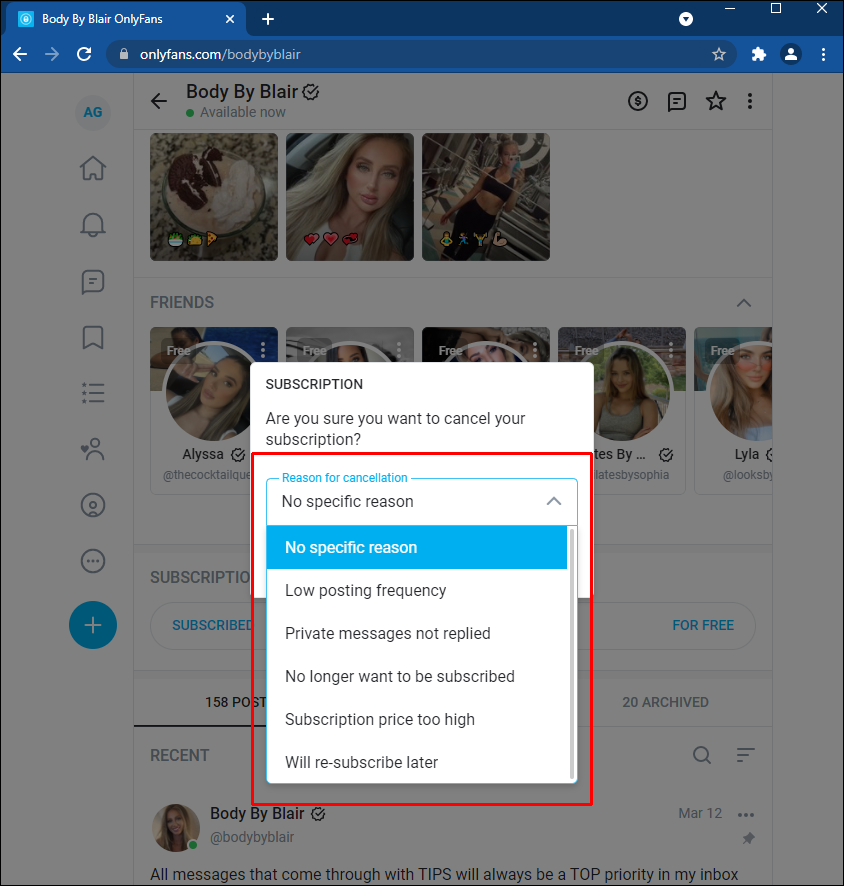
When a creator raises their price, auto-renewal stops. That is a platform mechanic, not a creator choice. Your existing access continues until the paid period you already bought ends, and then you must re-subscribe at the new rate if you want to continue.
Three outcomes follow a price increase:
- Auto-renewal is cancelled automatically at the moment the new rate takes effect
- Access continues for the remainder of the already-paid period
- Re-subscription at the higher rate becomes a deliberate choice rather than an automatic charge
This mechanic is protective, but it still disrupts planning. If you budgeted $8 per month and the rate moves to $12, the cancellation gives you a decision point instead of a silent charge. Ranking history can predict this: a creator with a pattern of annual increases is likely to raise rates again on a similar schedule.
The same logic applies to tips and unlocks. Tips can reach $100, and PPV messages unlock up to $50, but those are one-time costs rather than recurring ones. A price change only affects the subscription line, not your past purchases. You keep access to anything you already unlocked.
Correlating Ranking Freshness with Price Accuracy
Ranking data decays. A card refreshed today is more reliable than one refreshed a month ago, and the timestamp tells you which you are reading before you spend anything.
| Data Age Indicator | Reliability Level | Subscriber Action |
|---|---|---|
| Updated within 24 hours | High | Treat the listed price as current, verify once before subscribing |
| Updated within 7 days | Moderate to high | Check the creator page for any change since the last refresh |
| Updated within 30 days | Moderate | Confirm the rate directly, especially if the history shows past changes |
| Updated 90 or more days ago | Low | Ignore the price figure and verify everything on the creator page |
Freshness also affects the promotional flags. A discount that ended two months ago may still appear on a stale card, which makes a page look cheaper than it is.
Card verification holds are a separate line item. The $0.10 hold is refunded within days and is not a charge. If a card or page appears to demand more than that for verification, treat it as a warning sign and stop.
Building Subscription Timing Around Price Predictability
Timing is the practical payoff of reading price data. A creator with a stable base rate and one predictable promotional window each year is easier to plan around than one with erratic changes.
Four timing strategies reduce billing disruption:
- Subscribe after a promotional period ends so you see the true base rate before committing
- Avoid pages showing multiple recent price changes until the pattern settles
- Batch subscriptions to creators with stable histories into a single monthly budget line
- Set calendar alerts before predictable promotional cycles so you can decide in advance
Budgeting tools help here. Treating subscriptions like any recurring expense makes price stability a selection criterion rather than an afterthought. A creator whose rate has not moved in a year is a known cost; one with three changes in six months is a variable you cannot plan around.
It also helps to know how the wider market looks before you commit. Understanding who is number 1 on onlyfans puts individual pricing in context, since top-ranked pages often set benchmarks that smaller creators follow.
Limitations of External Ranking Data for Pricing
No third-party tracker sees everything. Ranking cards capture public page data, and anything outside that view stays invisible to them.
| Data Gap | Why It Occurs | Mitigation Approach |
|---|---|---|
| Unlisted promotional changes | Short-run discounts may open and close between tracking checks | Verify on the creator page before subscribing |
| Private discount offers | Deals sent directly to existing subscribers are never public | Ask the creator directly about current rates |
| Bundle pricing complexity | Multi-month bundles do not map cleanly to a single monthly figure | Calculate the effective monthly cost yourself |
| PPV message rate variations | Per-message unlock prices change without any page-level update | Track your own unlock spending separately from the subscription |
Payment security is a related concern. Card verification holds, chargeback rules, and phishing attempts that imitate payment pages all sit outside ranking data entirely. Staying current on how phishing works protects you from links that look like a subscription page but are not.
When ranking data and the creator page disagree, the creator page wins. Direct verification is the final step before any recurring commitment, and it costs nothing but a minute.
FAQ
How often does BestOnlyFans update its price history data?
Refresh intervals vary by creator and traffic. Popular listings are revisited more often than niche ones, so timestamps range from a day to several months. Always read the timestamp before trusting a price figure.
Can a creator change their price without it appearing immediately on ranking cards?
Yes. If a price changes between tracking checks, the card keeps showing the old figure until the next refresh. The creator page reflects the change instantly, which is why direct verification matters before subscribing.
What does a flat price history line actually indicate about creator behavior?
It indicates one base rate held steady across the tracking window. That usually signals a creator who prefers predictable pricing over promotional swings. Longer flat histories are stronger signals than short ones.
How should subscribers interpret price data that shows multiple changes in a short period?
Multiple changes in a short window suggest an unsettled pricing strategy. Treat the current figure as temporary and expect further movement. If you subscribe, do so month to month rather than assuming the rate will hold.